In the last decade there has been an increasing amount of articles and social media posts regarding meditation. When you type in your search engine the word mediation, thousands of results come up. There are many articles and posts about how to practice meditation. There are also a lot of articles regarding the different types of meditation techniques that exist. There are also a lot of articles on the science backed research results of the benefits associated with a regular meditation practice.
Meditation is definitely not a new practice! Meditation has been around for a very long time. The earliest written record regarding meditation is from 1500 BCE! There are many different types of meditation with some having a longer existence than others. The oldest type of meditation is Vipassana Meditation, which involves observing your thoughts and emotions as they are, without judging or dwelling on them.
Before we move into different types of meditation, let’s start with what the definition of meditation really is. Meditation is a technique to develop awareness of the present moment. It’s a way to press pause on your life for a brief period of time to center yourself and feel calm.
When you are meditating, you are focusing on the present moment which means you are not able to worry at that moment. Worry is a stress-induced thought. Most of the stress we are experiencing daily is from worry, not from something actually happening at that time. The more we can bring ourselves into the present moment, which can be done through meditation, the less stress we are putting on our bodies!
Now that we know what meditation means, we can start with a basic meditation!
You will want to sit or lie down comfortably on the floor. Take your time to get into a position that feels relaxed and comfortable. Close your eyes. Once you are in position with eyes closed, let yourself settle until your breath is normal. Just breathe in deeply (inhale) and then breathe out slowly (exhale). Now focus on your breath, don’t try to keep a certain pace, or in a specific pattern. Notice what parts of your body move when you breathe like your chest, ribcage and abdomen. Once you notice your thoughts are wandering away from your breath, bring your attention back to your breath and what parts of your body move while breathing. Initially try this practice for two to three minutes, and you can work your way up from there.
You might be thinking that this type of meditation is difficult for you since you are just focusing on your breath. You find your thoughts can wander easily to things that are bothering you or about things that could happen in the future, or things you need to still do. Luckily there are many types of meditation out there for you to try and find what types work for you! Below are four other types of meditation we will go over for you to try.
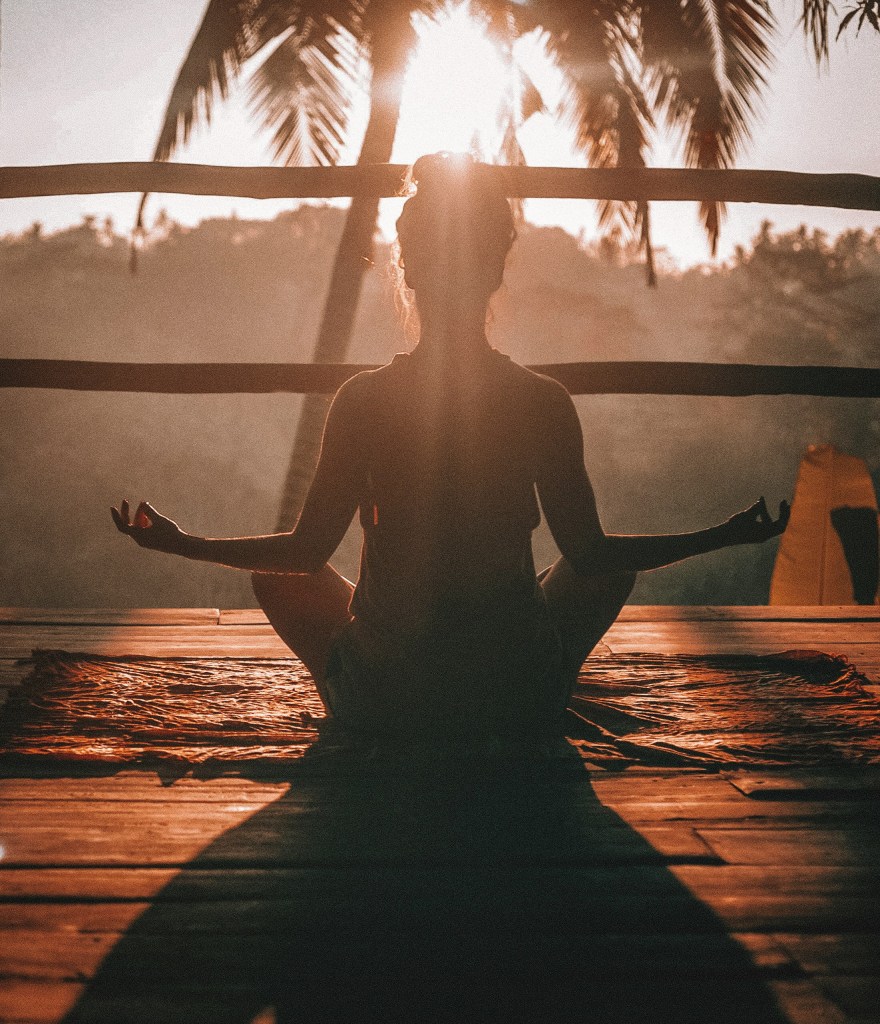
Guided meditation
You may have guessed from the name that this type of meditation is one that you will be guided through your meditation by a teacher or narrator. They may describe certain images for you to focus on, or they may talk you through a certain breathing technique or a certain mantra to focus on. Like the basic meditation you will want to be seated or lying down in a comfortable position. You want to slow down your breath. You will do so by taking a deep inhale and then slowly exhale to calm your body. There are many guided meditation options out there to choose from as well. Some great places to look for a guided meditation practice to try are apps that you can get, there are free YouTube channels you can put on, there are even podcasts and music services that offer guided meditations as well. You can always try different versions and see what you like! There are also different lengths for guided meditations you can find. You will be able to start with a shorter one like 5 minutes and work your way up to 20 minutes! Like the basic meditation, if you find your mind does wander just bring your attention back to the voice of the guide of your meditation. A lot of people like starting with a guided meditation, as you don’t have to structure the meditation yourself as someone else has. Some people find it easier as well since they have a voice to focus on which helps their mind wander less.
Loving-kindness meditation
Loving-kindness meditation is a type of meditation which is practiced to increase feelings of compassion, kindness and acceptance towards yourself and towards others. For this type of practice you will be sitting or lying down like in the basic meditation described above. Ensure you are in a comfortable position. Start by slowing down your breathing by inhaling deeply and then exhaling slowly. Once your breathing is relaxed, you will then focus on your breath and your body. Now you will picture a loved one and let that feeling of love be what you focus on. You will continue breathing at a slow and relaxed pace. Your focus will be on the love they show you and the love that you show to them. If you find your mind starts to wander to other thoughts, let the thought go and return to the feeling of love you had been focusing on. This type of meditation is done to boost positive emotions and lessen negative emotions.This type of meditation is great when you are feeling upset and stressed regarding someone you care about!
Visualization meditation
Visualization meditation is a practice in which you create a mental image or scenario to remove yourself from your day and generate feelings of relaxation and calmness. To create a strong visualization, you want to add as much detail to it and include as many senses as you can. When you start this practice it may seem hard to develop a vivid scenario in your mind. You will want to start with something simple, like looking at a sunset or sitting in the forest surrounded by trees. Again this is a type of meditation practice that will boost positive emotions. For this practice you will want to start in either a seated or lying down position. Once you are in a comfortable position, you want to relax your breathing. You relax your breath by taking in a deep inhale and a slow exhale. This type of breathing will calm your body. You can then start to build your mental image or scenario. Like the other types of meditation, if you notice your mind starts to wander, you want to bring it back to your mental image and continue on.
Mantra meditation
In a mantra meditation a repetitive sound such as a word, phrase or syllables is what you are focusing on in this practice. Some people find it easier to stay focused on a sound instead of just their breath like in the basic meditation. They find their mind wanders less with the focus on a mantra. The repetition of the word, phrase or set of syllables can be said silently or out loud. There are many different types of mantras to choose from. They can be short like syllables, with an example being “om.” They can be a single word like “calm” or “peace.” They can be a short sentence like “I am worthy” or “I choose peace.” With this practice you will want to start in either a seated or lying down position. You want to relax your breathing. Do so by taking a deep inhale and a slow exhale. This will also start to calm your body. Continue your slow breathing and begin to chant your mantra out loud or silently. After a little bit, your mantra and your breathing pattern will match up. If your mind begins to wander as you meditate, remember to redirect it back to your mantra.
Benefits of meditation
There has been a lot of research done on the benefits of practicing meditation. Some of the benefits of meditation include coping with chronic pain, improved sleep, reducing blood pressure, improved ability to concentrate and solve problems, ability to deal with problems and stressful situations and reducing stress.
So how does meditation reduce stress? The stress hormone cortisol is increased when someone is undergoing physical or mental stress. One of the harmful effects of cortisol is inflammation in the body. In recent studies scientists have found that those practicing meditation had lower levels of cortisol in the blood which means it can lower stress. As was mentioned before, worrying is a stress induced thought and when you are meditating you can’t worry as you are just focused on the present moment and your breath. Therefore, the more you can practice meditation and learn to stay in the current moment, the less you are worrying and the less cortisol is coursing through your body.
Meditation is like any skill you want to learn. The more you practice it the easier it will become and the longer you can meditate for without your mind wandering off. Don’t worry though, even those who have practiced for a long time find their mind wanders sometimes. It is part of the learning process. When you do find you are thinking about other things, remember to bring your focus back to your breath and your practice. Also the longer you practice the longer your meditation sessions can become. Over time you will be able to go from 2 minutes to 20 minutes!
As mentioned, meditation is something that you will need to practice to improve your focus. To gain the benefits of meditation you will need to find a way to incorporate meditation into your daily life. Working on this practice will bring you a sense of calm and a focus on the present moment. This can help you feel less stressed on a daily basis. This practice of becoming present and calm, will help you be in a mindstate to make good decisions when in a stressful situation. The more you practice, the more often you will respond instead of react in a stressful situation. By having a daily practice you can also gain the benefits listed above like lower blood pressure and improved sleep!
The way to gain the most out of your practice is to make it a daily practice. I know this might sound like a lot but it’s only for a few minutes which you should be able to find somewhere in your day! It would also be good to try to find those few minutes at the start of your day before your schedule becomes full, or at the end of your day before going to bed.

 Ditch Stress
Leave a reply to Overwhelmed by the Holidays? Practical Tips to Avoid Burnout – Ditch Stress Cancel reply