Do you find yourself at work and realize you weren’t really paying attention to your surroundings on your way there, since you can’t remember anything in particular that happened on your commute? When you think back on it, were you thinking about things you had to do at work, or places you needed to go on your way home, or what you are going to make for dinner or about that argument you had the night before? This is how you know you weren’t present on your commute to work. You were thinking about the past or the future instead of being in the present moment.
So what does being in the present moment mean? It is defined as being aware and mindful of what is happening at this very moment. That makes sense, but what does mindfulness mean? You have probably heard the word but might not really be sure what it means. Let’s start with a simple definition! Mindfulness means living in the present moment with acceptance and without judgment. It means that you are aware in the present moment and engaged with your surroundings. Mindfulness is a state of intentional, nonjudgmental focus on the present moment.

Practicing mindfulness isn’t something new. Mindfulness dates back over 2000 years in Buddhist philosophy. In 1979 the Mindfulness-Based Stress Reduction (MBSR) program started to help people with stress. Researchers have been studying mindfulness for years to find out what kinds of benefits it can have on people. The research has found several physical and mental health benefits from regular practice. Some of the health benefits include improved mood, improved coping with chronic pain, lower blood pressure, better sleep, improved cognitive function, improved immune system and reduced stress.
So how does mindfulness impact stress? Mindfulness helps manage stress by calming the amygdala, a small structure in the brain that is a key part of emotional control and processes. Mindfulness keeps us grounded in the current moment with a nonjudgmental point of view. Learning to manage our stress will help us thrive in life by giving us greater self-awareness, more resilience for when difficult times arise in our lives, and an increased ability to stay grounded when challenging things are happening in our lives, and we can then make better decisions in those stressful situations.
When we are stressed there are physical changes to our body that indicate we are feeling stressed. These physical changes could include shallow breathing, tense muscles, and increased heart rate. When practicing mindfulness exercises, we become aware of body sensations like the ones listed here that we feel when we are stressed. This awareness can be a clue to how we are feeling before we reach the point of making poor decisions from a worried mindset.
When stressful things happen we often react. When we react, we aren’t coming from a rational place and might say or do things we later come to regret. Our reaction could even make the situation worse. Mindfulness helps us manage stressful situations. Mindfulness helps us take a step back from the situation where we can choose our words and actions with intention. Simply put, it helps us respond instead of react.

A lot of the stress we experience isn’t from stressful things happening but is created by stress-inducing thoughts. I know this might sound untrue but let me explain! The stress we are experiencing often is from worry. It’s not that something is actually happening to us but we are thinking about what could happen to us. Let me give you an example. Your boss gave you a project which includes a presentation for a client. The night before the presentation, you find yourself struggling to fall asleep. You keep thinking about the presentation and how things could go badly. You worry the presentation won’t go well and the client won’t like it. You worry your ideas aren’t good enough. You then start to worry you will disappoint your boss that gave you this opportunity. You may even worry you will get fired over it. This worry is creating stress in your body and mind. You are making negative guesses about what will happen tomorrow in your presentation. The stressful event (the presentation) isn’t even happening at this moment, but you are stressing out about what could happen, which is causing stress in your body.
Practicing mindfulness is how we learn to break away from these negative thoughts. Mindfulness helps us separate ourselves from these worries which reduces the stress we are experiencing in our body. By practicing being in the moment with a non judgemental mindset, you are only focusing on what is happening right at that moment instead of what did happen or could happen. You are also not forming an opinion on what is happening, you are just experiencing the moment as it happens.
Now that we have discussed what mindfulness is and the benefits of it, you might be asking what types of mindfulness practices are there that you can use to help you reduce stress in your life. There are many types of mindfulness practices which you can learn. We are going to review four types. All of these mindfulness practices focus on the breath and calming the body. These practices are about taking some time for yourself to breathe deeply and focus on what is happening in the moment.
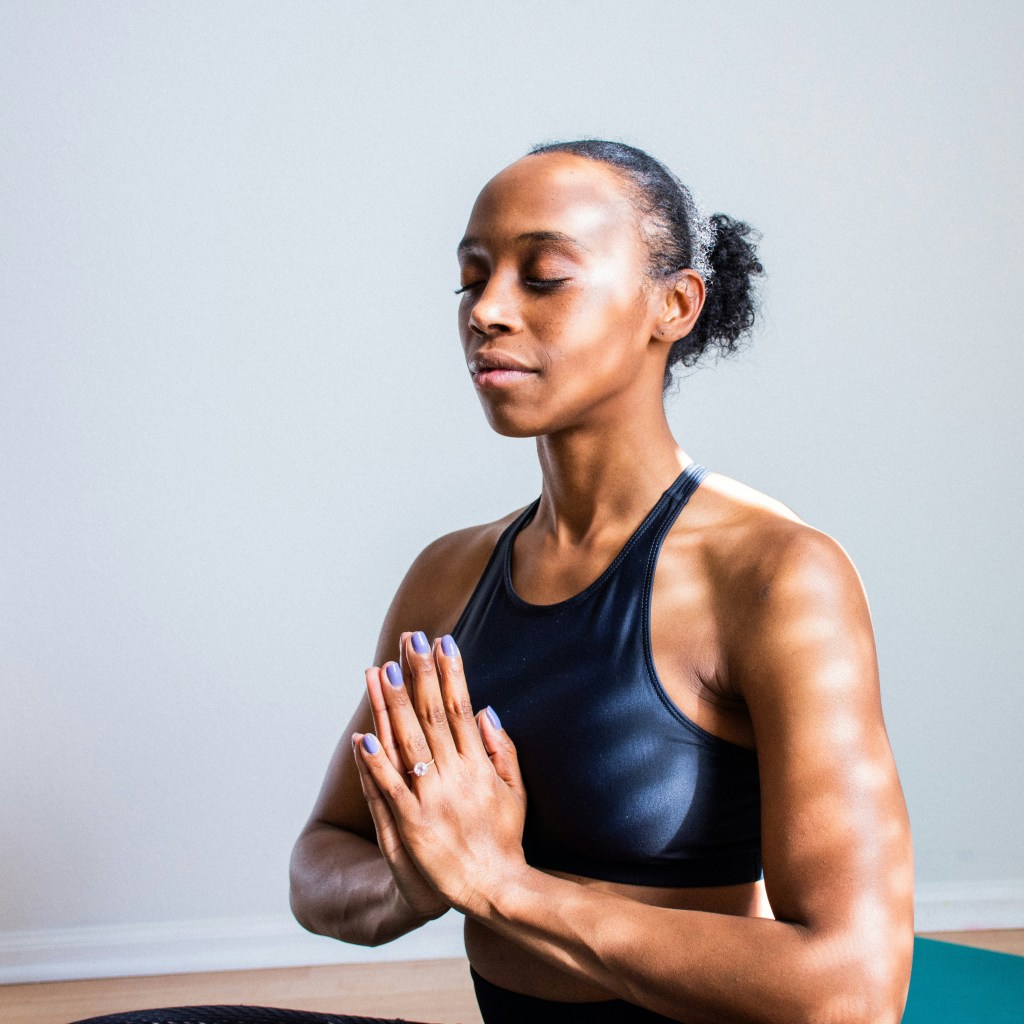
- Mindful breathing
This is the practice of focusing on the sensation of your breath coming in (inhale) and going out of your body(exhale). In mindful breathing you take deep breaths, not short quick ones. When we practice deep breathing we are activating the parasympathetic nervous system. Mindful breathing can be done while standing, but probably best to start practicing it sitting or lying down. To make it a regular practice it’s best to do it around the same time each day, but you can also practice it when you feel stressed at any time. Focus on the rise and fall of your chest. You may find your mind starts to wander and you start thinking about other things. When you notice you’ve wandered off mentally, bring your thoughts back to the sensation of breathing.
- Mindful movement
This is the practice of bringing your full attention to your movement. It doesn’t have to be one specific type of activity. It is about focusing on your movement and breath instead of going through the motions while distracted with other thoughts. Two activities that would be easiest to start the practice with as they are slower movements, would be walking meditation and yoga.
a)Walking meditation
With a walking meditation you aren’t trying to go somewhere in particular, or on a timeline. Don’t try to practice this if you are running late trying to get somewhere! Walking meditation is a way to get the mind to focus on what is happening in the present moment. As you start to walk, notice how your body feels. Do you feel stiff from having sat a lot or are you limber? Do any of your muscles feel sore or do they feel loose? Do you feel anxious or do you feel relaxed? Notice how you are walking. Are you standing tall or are you hunched? Are your arms moving while you move your legs or are they fairly still? Now start to focus on what is going on around you while you walk. Are there cars passing by you? Are there other people walking by? Can you hear any birds? Is there any movement in the trees from the wind or wildlife? You are only noticing those things you aren’t thinking about them. You simply want to notice and move on. If you find you are thinking about anything other than your movement, remember to let the thoughts go and put your focus back on your movement.
b) Mindful yoga
Yoga can be a great activity to do while practicing mindfulness. You will focus on what is happening in the moment while performing yoga poses. The difference between other types of yoga practice and a mindful yoga practice is the focus on mind-body awareness, which is focusing on what you are doing at that moment. A great way to try this practice is when you are in a position to focus on different parts of your body. Different parts of your body will feel differently when you are in different poses. When emotions come up while you are practicing, simply observe them and don’t attach any judgements to them. When your mind starts to wander, remember to let those thoughts go and focus on how your body is feeling in that pose you are practicing. The goal is to always get your thoughts back to how your body is feeling in each pose of your practice.
- Body scan practice
A body scan practice is a great way to connect your mind and body. It can help with releasing built up tension in your body. It may feel awkward at first, but it will help reduce stress you are experiencing. You can choose to either sit or lie down to practice this. Close your eyes and begin to focus on your breath, notice the inhale and exhale. Start with your toes and work your way up the body. Focus on your toes and continue to breathe slowly and deeply. You can spend anywhere between 15 seconds and 1 minute as you breathe slowly and focus. Once you are done, move slowly to the next part of your body. You may notice emotions coming up on a certain part of the body you are focusing on. Notice it and then let it go. With the body scan practice you want to acknowledge your emotions but focus on your breath and how your body is feeling in the practice.
- Progressive Muscle Relaxation
Progressive Muscle Relaxation (PMR) is a mindfulness practice that has someone relax a certain muscle by first tensing it and then releasing it. It was found that doing so also helps relax the mind. You have to focus on one muscle group so you can notice the tension that area is experiencing. Tensing of that specific area first, allows you to really notice the sense of relaxation you experience when you let go. Start this technique by sitting or lying down. Take a few deep slow breaths. Start with your toes and work your way up the body. You will inhale deeply as you tense each muscle group and hold for 5 seconds. Once you are at the end of the 5 seconds, you exhale fully and let your muscles relax for 10 to 20 seconds. Feel how relaxed that area is, and then move on to the next muscle group. Remember that if your thoughts start to drift away from your breath and how your muscles feel, bring it back to that area. This focus on how relaxed your muscle groups are feeling will calm the body and the mind which will reduce your level of stress in both your body and mind.

Like other skills you want to develop, you need to practice mindfulness to improve. If you only do it sporadically you won’t be able to reap the benefits of the practice. If you do practice it though, it will become not only a healthy habit but will also change the way you naturally respond to what is happening in your daily life. There will still be stressful events that happen in your life. The benefit of mindfulness though, is you won’t be adding the stress your mind creates with worry. By practicing mindfulness regularly, you will gain the health benefits we listed above and reduce unhelpful thoughts like worry and rumination that lead to stress.

 Ditch Stress
Leave a reply to The Link Between Stress and Sleep: Why Cortisol Keeps You Up at Night – Ditch Stress Cancel reply