I once chased perfection so hard it nearly killed me. Literally.
And I’m not alone.
“Perfectionism is not the same thing as striving for excellence. Perfectionism is a way of thinking that says: ‘If I look perfect, live perfect, work perfect, and do everything perfectly, I can avoid or minimize shame, blame, and judgment.’”
— Brené Brown
This probably won’t surprise you, but recent research shows that perfectionism is on the rise, especially among younger generations.
A meta-analysis of 164 samples, encompassing over 41,000 college students from 1989 to 2016, revealed significant increases in three dimensions of perfectionism:
- Self-Oriented Perfectionism: Setting sky-high standards for yourself, constantly pushing for perfection.
- Socially Prescribed Perfectionism: Feeling like everyone around you has impossible expectations, adding pressure to be flawless.
- Other-Oriented Perfectionism: Placing unrealistically high standards on others, expecting perfection from them too.
We are drowning in perfection. Between Instagram’s filtered reality and society’s pressure to achieve, we’re surrounded by impossible standards. This constant exposure to “perfection” is fueling higher rates of anxiety, depression, and burnout.

My First Big Brush with Perfectionism Nearly Killed Me
I grew up in a house that was very focused on outward appearances. My whole life had been shadowed by comments about how people were supposed to look and the ways in which I was missing the mark.
I was a slightly overweight teen, but I was mercilessly bullied about it. I had no idea what to do until, at 14, I got hold of a Weight Watchers booklet. It seemed simple enough, so I started following the suggestions.
At first, I stuck to the recommendations, but then I thought: If some is good, more is better. I wanted to be the thinnest person I could be.
I became obsessed with dieting perfectly.
The obsession with doing everything just right became a tyrant in my mind—allowing for no deviations, no missteps, no mistakes. I would berate myself if anything was out of line.
One year later, I was down to 76 pounds and sitting in a hospital ward, where I would remain for the better part of a year. I spent all of grade 12 trying to heal from the mess I was in.
My mind and body were in bad shape: I had one-third of of the red blood cells I was supposed to, and my body had eaten through most of my muscle. I had an MRI to see if my body was eating my brain. I was numb, anxious and depressed, somehow all at the same time.
It’s been a hell of a time recovering, and I’ve had a few relapses, but I’ve learned a lot about the cost of perfectionism and how to get out from under its spell.
Perfectionism is a liar: It tells us that if things are not this one specific way, they are worthless.
But that’s just not true. Something is better than nothing, trying and failing is better than never trying, and making mistakes is part of being human.
Perfectionism and Stress
Perfectionism leads to stress because perfectionists set unrealistically high standards for themselves, which results in constant pressure and fear of failure. They worry about making mistakes or not meeting their own expectations.
Perfectionists also tend to be overly self-critical, which can lead to anxiety and burnout. They focus on flaws instead of successes and rarely feel satisfied or relaxed, keeping their stress levels high.
It’s like chasing an impossible goal—exhausting and overwhelming.
The Hidden Costs of Perfectionism
Not everyone nearly dies from perfectionism—but its hidden costs are very real. Perfectionists are more prone to anxiety, depression, and burnout, constantly fearing mistakes or falling short.
The fear of not getting it just right often leads to procrastination and strained relationships—because high standards don’t just apply to themselves. Meanwhile, they’re missing out on growth opportunities, new experiences, and creative ideas while caught in loops of anxiety and self-doubt.
The biggest irony? Perfectionism rarely leads to perfection. Instead, it often holds people back, keeping them trapped in a cycle of stress and self-criticism.
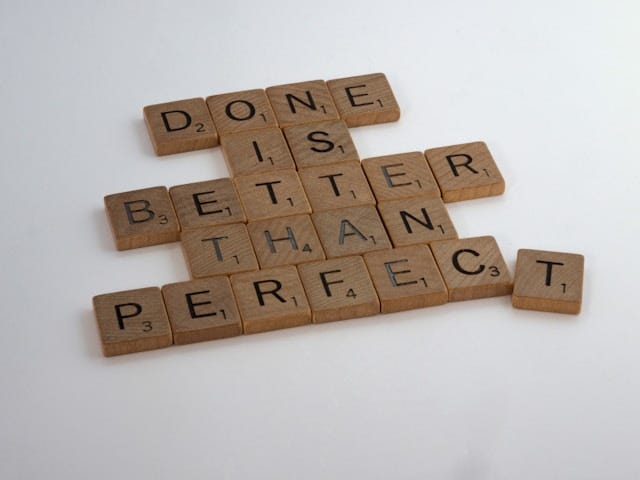
What to Do Instead: Celebrating ‘Enough’
Enough is a funny concept—it’s highly individualized, mostly used comparatively, and often a moving target. It can feel like we’re never thin enough, rich enough, smart enough, successful enough. The list goes on and on.
But what if we decided to embrace ‘enough’? I know, I can almost hear your heart breaking—it sounds so… lame? So not sparkly, shiny, and exciting as PERFECT sounds.
BUT…
Striving for ‘enough’ is about letting go of unrealistic standards and embracing imperfection. Research shows that people who aim for excellence without demanding perfection tend to be happier, less stressed, and more resilient.
The more that I could make peace with myself, my body, my life, accepting things that weren’t “perfect”, the healthier I have become.
This doesn’t mean you don’t ever try again, or work hard for what you want, it’s just that you cut yourself some damn slack on your journey. You allow room for mistakes and growth without harsh self-criticism.
Instead of obsessing over every detail, focus on progress rather than perfection.
It’s about giving your best effort without letting the fear of failure hold you back.
But How Do We Do Enough? Some Places to Start:
Give yourself permission to do less than 100%: You don’t need to bring your A-game to everything. Sometimes 70% effort is exactly what the situation calls for, and that’s perfectly okay.
Focus on Mental Well-being: If it costs your mental health, it’s not worth it. Accepting that enough is enough can significantly reduce anxiety and pressure.
Stop the comparison game: Your “enough” has nothing to do with anyone else’s highlight reel. Focus on your own progress instead of measuring yourself against others. Comparison really is the thief of joy.
Notice your inner voice: Start listening to how you talk to yourself—that internal dialogue fuels perfectionism. Negative self-talk is poison. Be kind.
The 80% rule: Aim to complete things to 80% of your imagined “perfect” standard, then consciously choose to stop and move on. Intention is the important part here.
Version control mindset: Think “This is version 1.0” rather than “This is incomplete.” It frames progress as intentional rather than abandonment.
Practice with low-stakes projects: Build comfort with imperfection by doing quick, imperfect versions of things that don’t matter much.

Striving for “Enough” Isn’t About Lowering Standards
It’s actually about raising your standards for self-compassion, growth, and progress.
Perfectionism tells us we need to get it all right, all the time—but that’s just setting ourselves up for stress and burnout. Instead, what if we aimed for “enough” and focused on consistency with a twist of adaptability?
Showing up doesn’t always have to mean giving 110%. Sometimes it means doing the easier version or scaling down when life gets hectic.
Progress isn’t about perfection; it’s about finding ways to keep moving forward, no matter how small the step.
And that’s exactly what I’m still learning. Letting go of perfectionism will always be a work in progress for me, but every day I work on being kinder to myself, being grateful for the good, and letting enough be enough. I’m not perfect at this either, and that’s okay.
 Ditch Stress
Leave a comment